Robotaxi goes bicoastal-ish, unsupervised rides launch in Miami
Tesla's unsupervised Robotaxi network left Texas. Rides with nobody in the front seat are live in Miami, the fourth city after Austin, Dallas and Houston, the fleet is targeting 1,500 vehicles by year-end, and Phoenix, Orlando, Tampa, and Las Vegas are on deck.

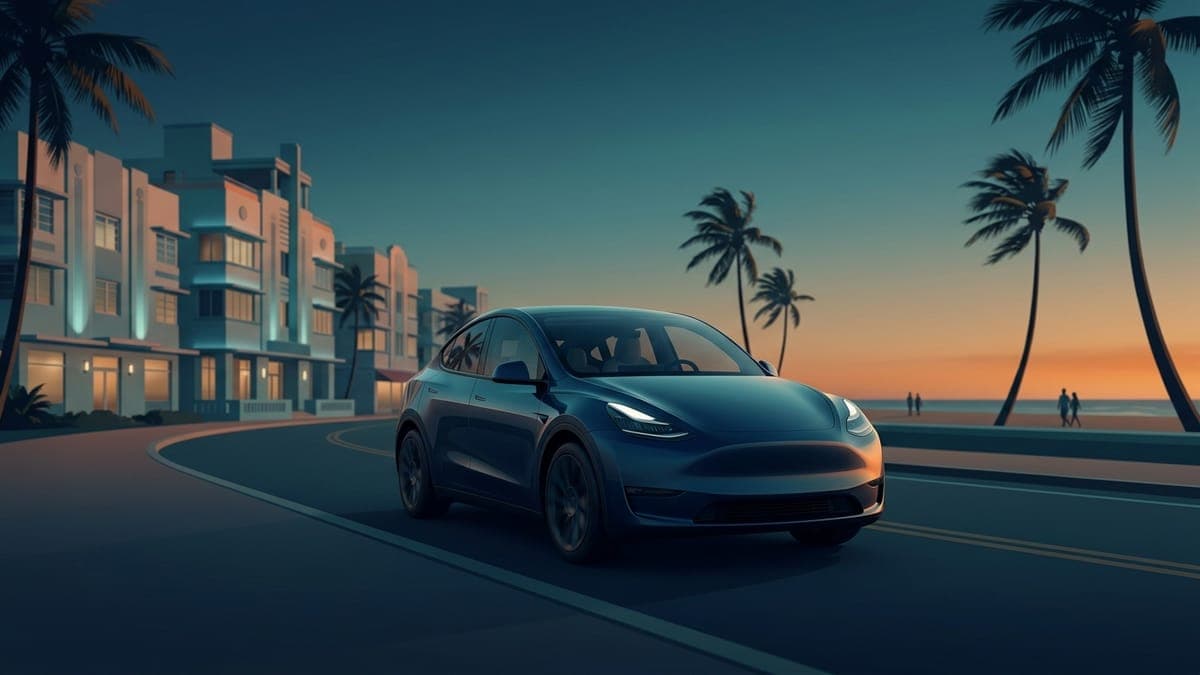
Where Robotaxi runs now: seven metros as of October 2026, six of them offering unsupervised rides. Our Tesla Robotaxi cities tracker has every city, launch date and source.
Texas has company. Tesla's unsupervised Robotaxi service launched in Miami on July 3, as Drive Tesla reported, making it the fourth city where you can hail a Tesla with nobody in the front seat, after Austin, Dallas and Houston, and the first outside Texas. (An earlier version of this post called Miami the second city; Dallas and Houston went unsupervised in April.) Yahoo Finance's coverage frames the launch as a narrative shift for the company, and the details back that up: this isn't a pilot with safety monitors, it's the unsupervised network extending to a new state.
What launched
Miami riders get the same experience Austin has been refining for over a year: summon a driverless Tesla through the app, get in, go. Per BigGo's launch report, the combined fleet is expected to reach about 1,500 vehicles by year-end, with analysts anticipating Phoenix, Orlando, Tampa, and Las Vegas joining the map before January.
Miami is a shrewd first city outside Texas. Flat, grid-heavy, warm year-round, tourist-dense, and full of people who treat a car ride as part of the evening's entertainment. If Austin proved the technology, Miami tests the business.
The scaling logic
The interesting part is what Tesla didn't have to do: build a new stack for a new city. The same software that crossed Canada without an intervention and just got a 20% faster runtime in FSD 14.3.5 drives the Miami fleet. Tesla has also now unified the underlying model across FSD, Summon, and Robotaxi, which means every consumer car on 14.3.5 is effectively running the robotaxi brain with a human supervisor attached.
That's the expansion math working in Tesla's favor. Each new city is mostly a regulatory and operations problem, not an engineering one. Meanwhile purpose-built Cybercabs are ramping at Giga Texas, waiting to give the network a vehicle designed around having no driver at all.
Elon Musk has kept expectations grounded on the money side, saying meaningful robotaxi revenue is unlikely before 2027. Five cities and 1,500 vehicles by New Year's is the groundwork, not the payoff.
Our take
A year ago the reasonable skeptic's position was that Austin was a demo that would never leave Austin. Dallas and Houston answered that in April, and Miami answers the next version of it: a new state, new roads and new weather. The first city outside home turf is always the hardest argument to make, because it proves Texas wasn't a special case.
There's also a fleet-identity angle we can't help noticing. A robotaxi is a rolling brand asset that thousands of people see daily, and Tesla knows it: the company has already wrapped Cybercabs for America's 250th birthday. As these fleets grow, the vehicles that get noticed, photographed, and posted will be the ones that look like something. Fleet operators are about to rediscover what wrap designers have always known.
You don't need to wait for a fleet to think that way. Our guide to what a Tesla wrap costs covers the economics, and the studio is where the look takes shape. Design yours before the robotaxis show up wearing something better.
Put a custom wrap on your Tesla
Free community designs for every model, or make your own in the browser.