The Tesla Semi got its own launch party on September 24
Tesla launched the production Semi at its new Sparks, Nevada factory on September 24, with 325 and 500 mile versions and a plant built for 50,000 trucks a year. Here is our preview from before the night, and a link to the full recap.

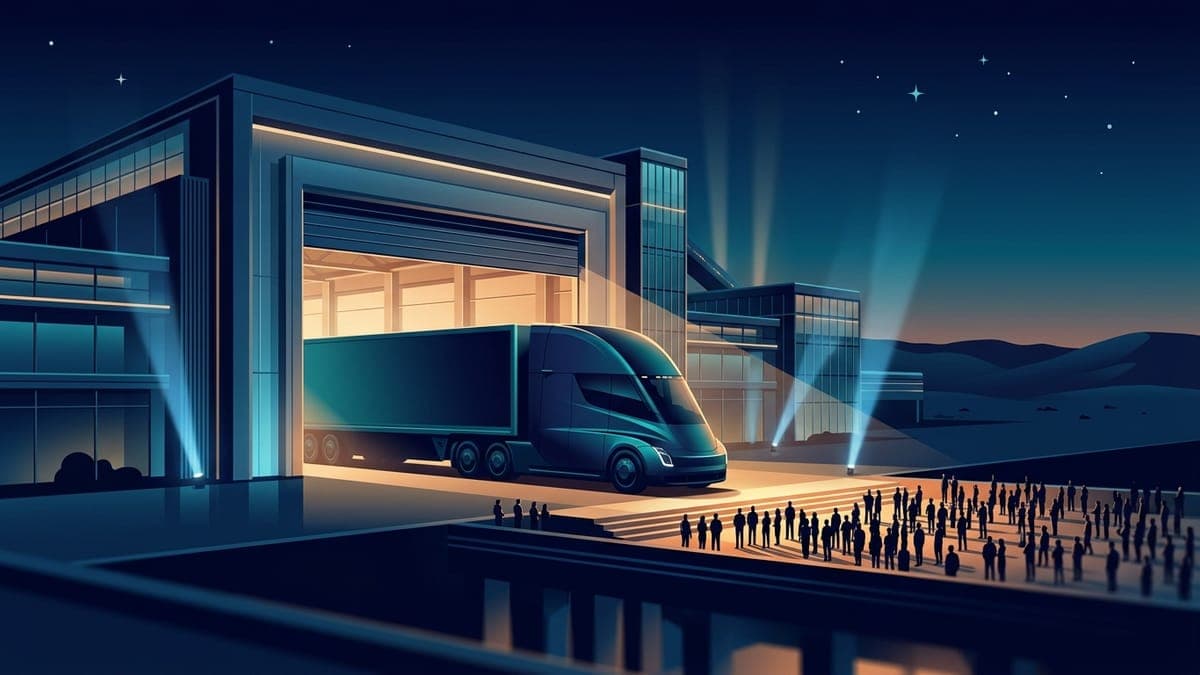
Tesla launched the production Semi on September 24 at its new factory in Sparks, Nevada: a 325-mile Standard Range and a 500-mile Long Range, both with an 800 kW three-motor powertrain, from a plant built for 50,000 trucks a year, per Electrek's launch coverage. At least nine fleets, including PepsiCo, DHL and Einride, brought trucks wearing their own logos, and a Megacharger took a Semi from 0 to 60% in about 30 minutes during the event, as Not a Tesla App's recap describes.
The event has happened: read what Tesla announced at the Semi launch. Our preview from before the night follows.
The Tesla Semi has been in high-volume production since April, and on Thursday, September 24 it got a party: a rollout event at its new dedicated factory in Sparks, Nevada. Invitations went out in September, per Not a Tesla App. The event was invite-only, guests had to be 21 or older, and invitees could bring one person along.
What the event is
Tesla's own description, first reported in late August, calls it a rollout celebrating the opening of the Semi factory, with factory tours and ride-alongs in the updated truck. RSVPs were due September 2, so the guest list is set. Engineering analyst Sandy Munro posted his invitation on X, which is about as good a signal as any that the room will include people who take trucks apart for a living.
The factory is the headline
The building matters more than the ribbon. The Semi plant sits next to Gigafactory Nevada, covers roughly 1.7 million square feet, and is designed to produce up to 50,000 trucks a year at full capacity, as Electrek detailed when the inauguration was first announced. For scale, that is around a fifth of the entire North American Class 8 market from one site.
The reason it took this long is the same reason it works now. The 4680 battery cells the Semi runs on are made in the same Nevada complex, so the cell supply that throttled the program for years is finally next door. Our April coverage has the production-start details; the September event is that story reaching the public.
What the refreshed Semi carries
The truck attendees will ride in is not the 2022 pilot vehicle. TeslaNorth's rundown of the refresh lists the changes: a 48-volt electrical architecture, electric steering assistance in place of the old hydraulic system, upgraded actuators, independent front suspension, and custom 4680 cells built around commercial-truck duty cycles.
Two variants are on offer. The Standard Range is rated around 325 miles and comes in under 20,000 pounds of curb weight; the Long Range is rated around 500 miles at roughly 23,000 pounds. Both draw about 1.7 kWh per mile, put out up to 800 kW of drive power, and take a 1.2-megawatt Megacharger that restores about 60% of the pack in 30 minutes. Fleet operators care about exactly two of those numbers, range and charge time, and both are where a diesel truck cannot follow.
What to watch for on the 24th
Tours and ride-alongs are the program, but the news will be in the details attendees post afterward. Three things would be worth more than any speech. A current production rate, because "50,000 a year" is a ceiling and the ramp number is the one fleets plan around. Any word on Megacharger corridors, since a 500-mile truck is only as useful as the next 1.2-megawatt plug. And pricing for the refreshed truck, which Tesla has not restated since the redesign.
Expect at least one of those to slip out through a guest's camera roll before Tesla says it officially. That is how the Cybercab numbers reached everyone, and the Semi crowd includes people who count bolts for a living.
On the night, Tesla did not announce a price or a production rate. The launch recap covers what it did announce.
Why this matters beyond trucking
Tesla's industrial side is quietly becoming the part of the company that compounds. Cells, trucks, chargers, and grid storage feed one another inside the same complex, and a Semi factory at scale means 4680 production at scale, which every other Tesla product benefits from.
There is also a smaller point that Tesla owners already understand. Trucking companies wrap their rigs as a matter of course, because a Class 8 trailer is the largest canvas on the highway and a fleet livery sells the company and the truck at once. Expect the first branded Semis out of Sparks to show up in photos within weeks.
Your livery costs nothing
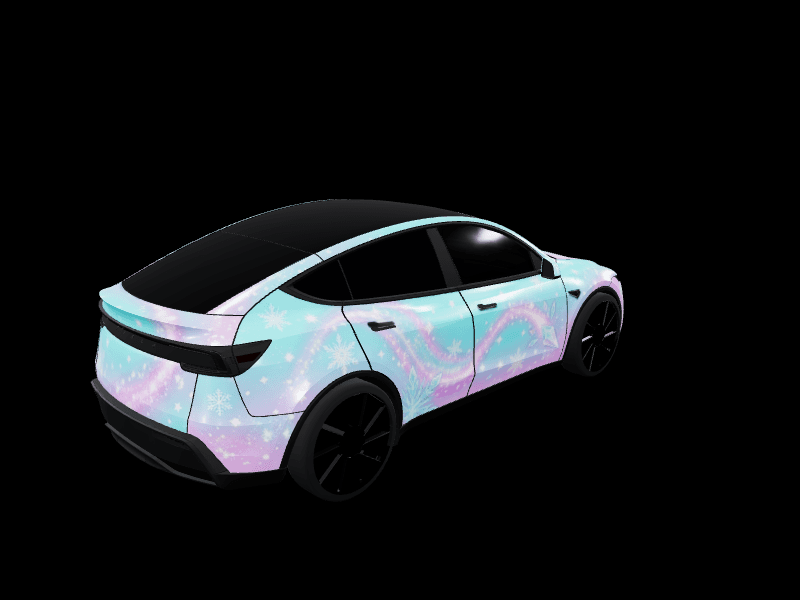
The Semi is not in our lineup, and the commercial wrap on one runs into five figures. Your Tesla does the same job on a smaller scale for free. The design your car shows on its own screen and in the Tesla app is your personal livery, and since this summer it loads straight from your phone. Check which Teslas support what, then open the studio, pick your car, and give it the paint job a fleet manager would sign off on.
The big rigs got their liveries on September 24. Yours can be on the screen tonight: open the studio.
Put a custom wrap on your Tesla
Free community designs for every model, or make your own in the browser.