Cybercab rides are live in Austin, and the Robotaxi app just hit number one
Tesla opened Cybercab rides to the public in Austin on September 4, three hours earlier than announced. Two seats, no steering wheel, no pedals, mixed into the regular Robotaxi fleet. The app topped the App Store the same day.
 By Max Calder, News editor5 min read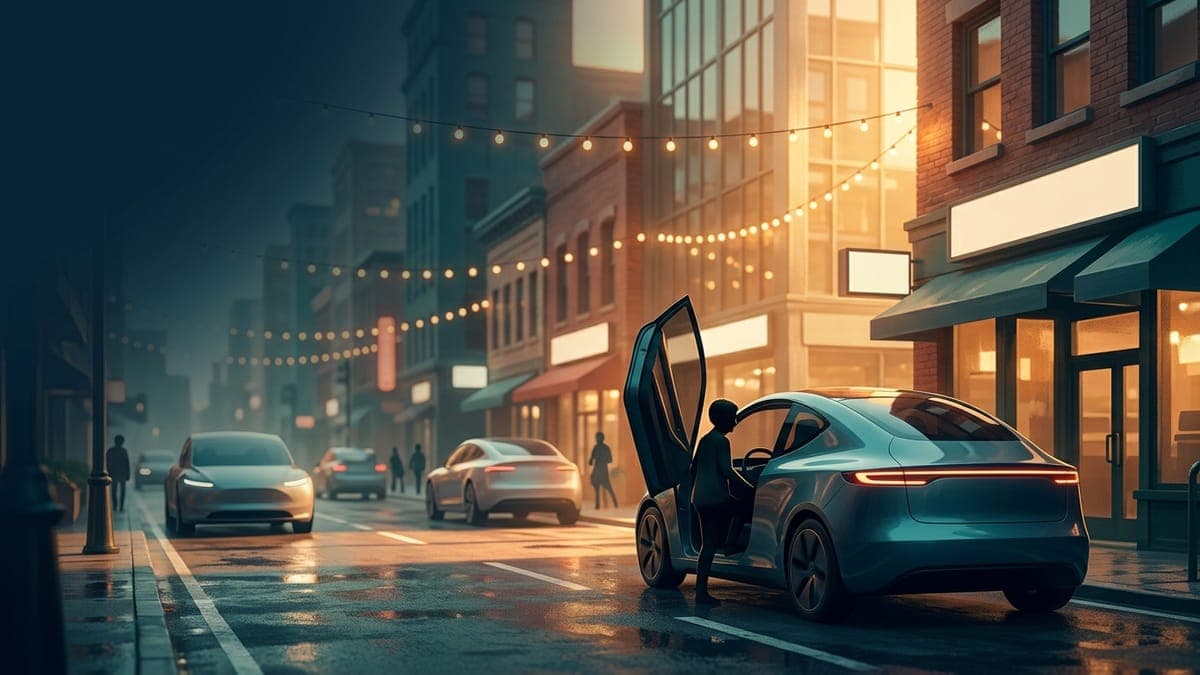
The Cybercab is carrying paying passengers. Tesla opened public rides in Austin on Thursday September 4, and moved the start time up by three hours because demand was already there. The Robotaxi app hit number one in the App Store's Travel category the same day.
This is the vehicle Tesla unveiled in 2024: two seats, butterfly doors, no steering wheel and no pedals at all. Not a Model Y with the driver removed. A car built from the start on the assumption that nobody in it is driving.
From invite-only event to public rides in a day
Tesla held a launch event in Austin on Wednesday September 3, invited guests only, and put Cybercabs into the public fleet the next afternoon. The original plan was 5 PM Central on the 4th. Tesla moved it to 2 PM instead.
That is a fast turn from stage to street, and it only works because the hard part was already running. Tesla has operated driverless Model Y robotaxis in Austin since June 2025, and has since added Dallas, Houston, Miami, Orlando and Tampa. The Cybercab was not launching a service. It was joining one.
The groundwork shows in the small details. Production-spec Cybercabs had been testing on public roads around Austin since June, Tesla ran training sessions with local first responders, and employees had been taking rides on the Giga Texas campus before any of this reached the app. By the time the public got in, the vehicle had already done the boring part of the job for months.
How you actually get one
You cannot request a Cybercab. You open the Robotaxi app, ask for a ride inside the Austin geofence, and dispatch sends whatever is closest and free. Sometimes that is a Model Y. Sometimes it is a Cybercab.
There is a real reason for that, and it is not coyness. A fleet works best when every vehicle is interchangeable to the dispatcher. The moment riders can filter by model, you get idle cars on one side and queues on the other. Tesla is treating the Cybercab as fleet capacity rather than as a novelty ride, which is the harder and more useful thing to build.
Fleet numbers are still small. Axios counted 45 Cybercabs registered in Texas, out of roughly 420 autonomous Teslas registered statewide. Early days, deliberately.
Small is the right way to start this. A robotaxi fleet is not a product launch where you ship a million units and fix things in a patch. Every vehicle is operating unsupervised in traffic, and the sensible move is to add capacity at the pace you can watch it. Waymo scaled the same way, city by city, for years before anybody called it inevitable.
What riding in one is like
No steering wheel means no steering wheel. There is no driver's seat to sit behind, no wheel twitching in front of an empty chair, none of the uncanny business that made the first generation of driverless demos strange to watch. The cabin is two seats and a screen.
The doors are the other thing people notice. Butterfly doors on a taxi sound like a designer's indulgence until you use one at a kerb: they open upward and outward, so you step in rather than folding around a door edge. The interior was designed to be cleaned fast between rides, which is the kind of detail that only matters if you plan to run the thing thousands of times a week.
Two seats is a deliberate choice too, and a slightly contrarian one. Most ride-hail trips carry one or two people, so a four or five seat car spends most of its life hauling empty seats around. Building for the common case makes the vehicle smaller, lighter and cheaper per mile, at the cost of the occasional group that needs a bigger car. In a mixed fleet, that group just gets a Model Y instead.
The app went to number one
Within hours of the launch, the Tesla Robotaxi app reached number one in the App Store's Travel category and recorded more than 2 million iOS downloads on its first day.
Most of those downloads are not in Austin. They cannot be: the service area is a geofenced slice of one city. What that number measures is how many people want to be ready the day it reaches theirs. For a service you cannot currently use, a couple of million people installing the app anyway is a strong signal about demand.
What it means for the rest of the fleet
The Cybercab exists because a purpose-built autonomous vehicle is cheaper to run per mile than a converted consumer car. Fewer parts, no duplicate controls, a cabin designed for turnover. Every Cybercab that goes into service is a test of whether that math holds outside a spreadsheet.
It is also the first vehicle built on Tesla's unboxed assembly process, where sections of the car are built in parallel and joined late rather than moving down one line in sequence. That is a manufacturing bet as much as an autonomy one, and Giga Texas is where both get tested at the same time.
For everyone else, the interesting part is what it validates. The same FSD stack that just passed 14 billion cumulative miles is what drives these. The Cybercab is not running a special build. It is running the fleet's software with the steering wheel deleted, which is the strongest statement Tesla could make about how much it trusts the stack.
If you want the full picture of where robotaxi service runs today, Nevada's approval for up to 5,000 vehicles covers the expansion side, and our guide to what each Tesla supports covers what your own car can do.
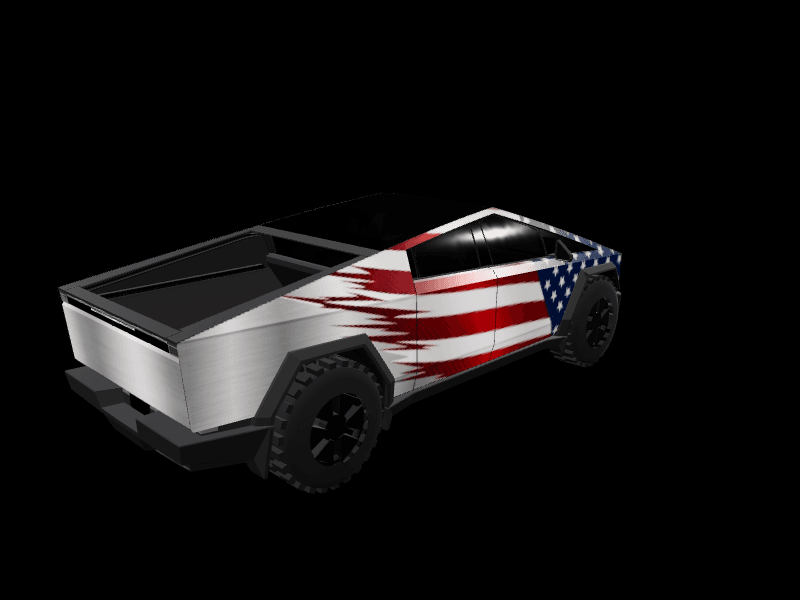
In the meantime, your Tesla can at least look the part. The studio is free, and a Cybercab-inspired wrap takes about five minutes.
Put a custom wrap on your Tesla
Free community designs for every model, or make your own in the browser.