Nevada clears Tesla for up to 5,000 robotaxis, and Las Vegas is first in line
Nevada's Transportation Authority granted Tesla a statewide autonomous network permit on August 20, authorizing up to 5,000 robotaxis over the next year, starting with Clark County and Las Vegas. Nevada becomes the third state to approve unsupervised Tesla rides.

Where Robotaxi runs now: seven metros as of October 2026, six of them offering unsupervised rides, with Las Vegas approved but not carrying riders yet. Our Tesla Robotaxi cities tracker has every city, launch date and source.
Tesla's robotaxi map just added its most famous city yet. On August 20, Nevada's Transportation Authority granted Tesla an Autonomous Vehicle Network Company permit, clearing the company to operate its robotaxi service throughout the state, starting with Clark County and Las Vegas, per Tesla Oracle's report on the approval. The permit authorizes up to 5,000 robotaxis over the next 12 months.
Nevada is the third state to approve Tesla's unsupervised service, after Texas and Florida. The pattern is starting to look like a rollout playbook rather than a series of one-off wins.
What the permit actually says
The details reward reading. The permit replaces an earlier interim order that had capped Tesla at 10 vehicles for internal testing, so this is the jump from pilot to commercial authorization. Tesla told regulators it will start with a limited fleet and scale gradually rather than flooding the Strip on day one.
Before paid rides begin, roughly 30 days of administrative work remains: vehicle inspections, insurance filings, and fare-rate submissions to the commission. Tesla must also notify regulators before expanding coverage beyond its initial area. None of those are obstacles; they're paperwork with a timeline. Commercial rides in Las Vegas could plausibly start within weeks.
And Las Vegas is close to an ideal robotaxi market: a compact, heavily trafficked core, year-round tourism, mild weather, and millions of visitors who arrive without a car. If there's a city where an autonomous ride network meets instant demand, it's this one.
The network behind the headline
The Nevada approval lands on top of a service that has been quietly compounding all summer. Unsupervised public rides currently run in six cities: Austin, Dallas, and Houston in Texas, plus Miami, Orlando, and Tampa in Florida. Tesla expanded operating hours to 6 am through 10 pm, seven days a week, and says its unsupervised fleet is now much larger with smarter vehicle distribution and routing that shortens wait times.
The Austin service area, where it all started one year ago, has grown again too: the geofence now spans roughly 288 square miles, about 9% larger than the previous boundary, per Teslarati's coverage of the expansion.
Every city in that list runs on the same foundation: the FSD stack trained on a fleet dataset that just crossed 14 billion miles. The robotaxi network isn't a separate technology; it's the same brain your Model Y gets in software updates, operating without a driver where regulators have signed off.
Why owners should care about a taxi service
Two reasons. First, robotaxi revenue funds the training flywheel that improves the FSD build in your own car; every regulatory win accelerates the loop. Second, the robotaxi program is where Tesla's fleet-personality decisions get made, from the Cybercab's wrap-friendly design to how a fleet vehicle presents itself visually. Fleets need identity, and Tesla has already shown it thinks about vehicle appearance as software.
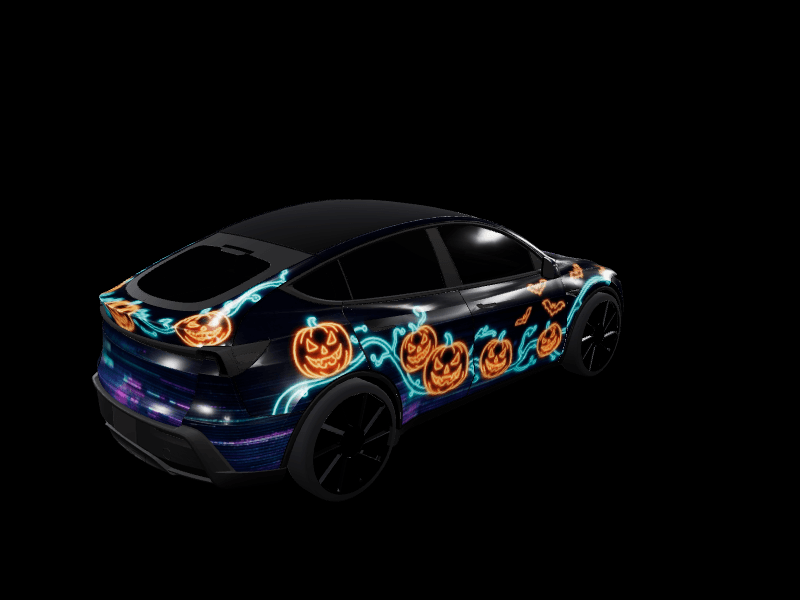
Which is the same bet we make every day: the way a Tesla looks is increasingly something you choose on a screen, not something fixed at the factory. Our guide to digital-first customization walks through that philosophy, and it applies whether the car is a robotaxi wearing a fleet livery or your own Model 3 wearing your design.
The map keeps filling in
Texas, Florida, Nevada, with Arizona and others reportedly in the pipeline. At the current pace, the interesting question isn't whether your city gets robotaxis; it's which quarter.
While the network grows into Las Vegas, your own car's look is still a blank canvas that takes two minutes to change. Open the studio, design a wrap, and give your Tesla an identity no fleet vehicle will ever match.
Put a custom wrap on your Tesla
Free community designs for every model, or make your own in the browser.