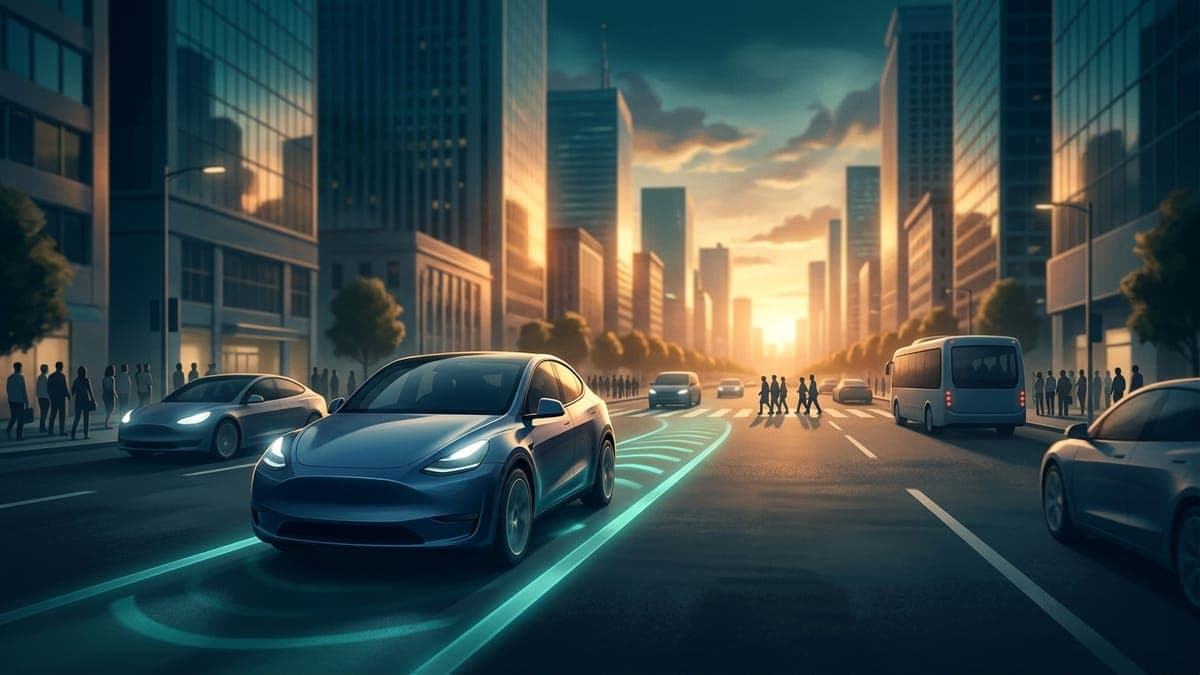
FSD 14.3.8 sharpens city driving while 14.1 Lite spreads across HW3
Tesla's late-August FSD wave pairs 14.3.8 for AI4 cars, with smoother city behavior and a new Pullover button, against a widening 14.1 Lite rollout that brings parking, reversing, and arrival options to Hardware 3. Both halves of the fleet move forward again.

Latest version: FSD 14.3.11 for Hardware 4 cars and 14.3 Lite for Hardware 3 cars began rolling out in software 2026.33.5 on October 6 and 7. 14.3.9 added Automatic Collision Evasion. Read what's new in FSD 14.3.9 through 14.3.11.
Tesla's FSD release train made its late-August stop with two builds moving at once: FSD 14.3.8 for Hardware 4 cars, carried by firmware 2026.26.6.5, and a widening rollout of FSD 14.1 Lite for the Hardware 3 fleet, per AutoPilot Review's rollout tracking. If the 14.3.7 wave was about smarter training, this one is about polish where it's hardest: city streets.
14.3.8: the city-driving build
14.3.8 continues the 14.3-series work on the parts of driving that separate good from flawless. The build upgrades the reinforcement-learning stage, sharpens 3D geometry understanding and traffic-sign recognition, and rides the series' rebuilt AI runtime, the one that cut reaction times by about 20% earlier this summer, now tuned further.
Owner reports collected by AutoPilot Review describe where it shows: noticeably less brake pulsing in city driving, more decisive unprotected left turns, and better composure in heavy rain and low-visibility conditions. There's a new Pullover button too, so a drop-off no longer requires taking over manually.
Early reports also keep Tesla honest on the remaining rough edges: parking-spot selection can still be eccentric, and some intersections still produce hesitation. The pattern from the last year suggests those land on a future point release's fix list in short order.
14.1 Lite keeps the promise to older cars
The second half of the wave matters to more people. FSD 14.1 Lite, the distilled version of the v14 stack compressed to fit Hardware 3's processing budget, is reaching more Model 3 and Model Y vehicles after an initial rollout in early August. Tesla Oracle notes the build follows engineering work to resolve ECU thermal issues found in the first v14 Lite, which is the unglamorous reality of squeezing a 2026 model onto a 2019 computer: it takes iteration, and Tesla kept iterating instead of walking away.
What HW3 owners get is not a token gesture. 14.1 Lite brings reinforcement-learning-trained behavior, parking and unparking with reversing, customizable arrival options for driveway or curbside drop-offs, persistent speed profiles, and Actually Smart Summon. A seven-year-old Model 3 gaining the ability to back out of a parking spot by itself, years after its "final" hardware spec, remains the strongest customer-loyalty argument in the industry.
Reading this wave
The version soup decodes simply this time. Hardware 4 cars: watch for 2026.26.6.x builds carrying 14.3.8. Hardware 3 cars: 14.1 Lite arrives on its own branch, and the rollout is staged, so patience beats a support ticket. Either way, the advice is the standard one: when your car offers an update, take it. Every branch in this wave carries FSD improvements, and the 14 billion fleet miles backing them keep compounding daily.
For the model-by-model picture of which cars support which capabilities, our Tesla feature matrix stays current.
Your car got faster. Did it get better looking?
A 20% reaction-time improvement arrived at your driveway for free while you slept. The one part of the car that never self-updates is how it looks on its own screen, and that's the part you control completely.
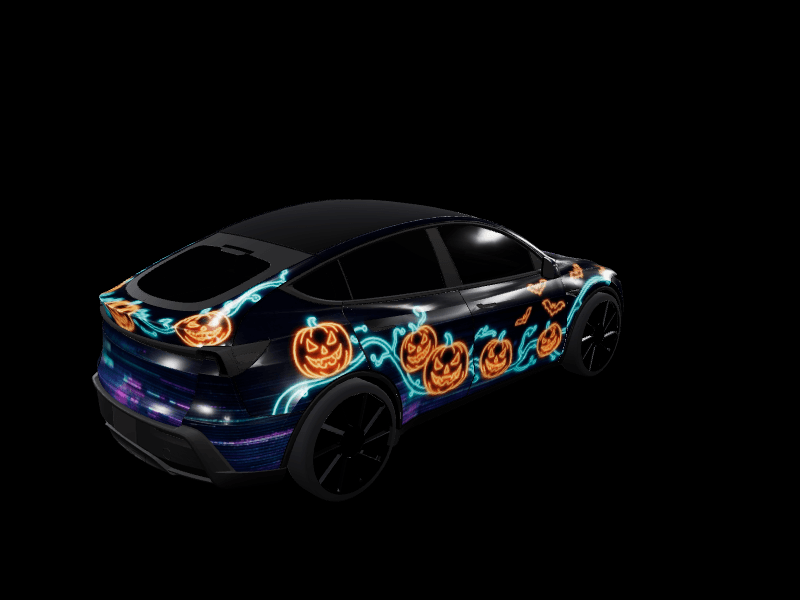
The same update train carrying 14.3.8 also carries the mobile-app wrap upload, which means applying a custom design is now a two-minute phone task. Open the studio, make something worthy of the new brain, and let the car wear it.
Put a custom wrap on your Tesla
Free community designs for every model, or make your own in the browser.