PPF vs vinyl wrap for your Tesla
Paint protection film and vinyl wrap solve different problems. PPF protects, vinyl styles, and a digital wrap lets you test any look for free before spending $2,000 or more on either. Here's how to pick.

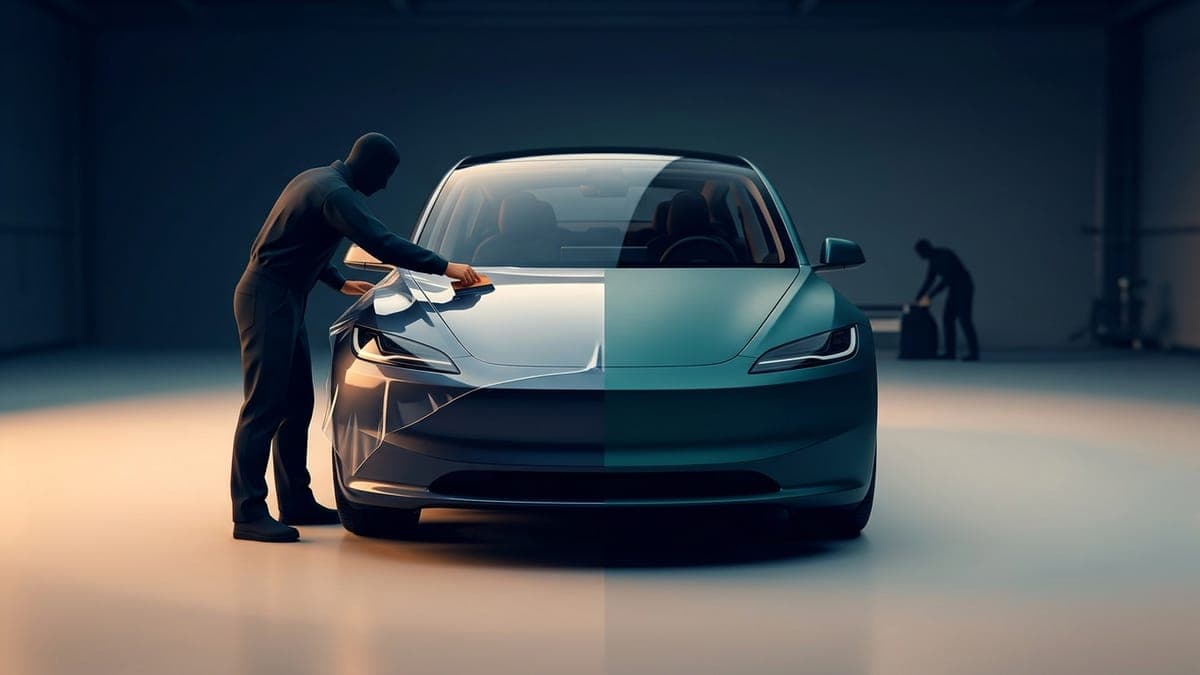
PPF and vinyl wrap look similar on an invoice and completely different on the car. Paint protection film (PPF) is a thick, self-healing clear film that exists to absorb rock chips. Vinyl wrap is a thinner colored film that exists to change how the car looks. PPF on a full Tesla runs $4,000 to $8,000 installed. A full color-change vinyl wrap runs $2,000 to $6,000. Both come off cleanly. Neither is reversible for free once you've paid for it, which is exactly why it's worth testing the look you want before committing.
This guide covers what each film actually does, what they cost on a Tesla, when to combine them, and how to preview any wrap design on your exact model without spending anything.
What does PPF actually do?
PPF is polyurethane, usually 6 to 8 mils thick, and it's engineered as armor. Highway sandblasting, rock chips, bug etching, light key scratches: the film takes the hit instead of your paint, and most quality films self-heal minor swirls with heat from the sun or warm water.
Most PPF is optically clear. You're paying thousands of dollars for your Tesla to look exactly the same, just protected. Matte PPF exists (it turns any factory color satin), and that's the one case where PPF changes the look.
Typical Tesla PPF packages:
| Coverage | What's covered | Typical installed price |
|---|---|---|
| Partial front | Bumper, partial hood, mirrors | $900 to $1,500 |
| Full front | Bumper, full hood, fenders, mirrors, headlights | $1,800 to $2,800 |
| Track package | Full front plus rockers, A-pillars, roof edge | $2,500 to $3,800 |
| Full body | Everything painted | $4,500 to $8,000 |
Teslas are common PPF candidates for one blunt reason: owners report the factory paint is on the soft side, and front-end chips show up fast on daily-driven cars.
What does a vinyl wrap actually do?
Vinyl wrap is a cast film around 3 mils thick, and it's a styling product. Color change, matte or gloss finish swap, printed graphics, full custom designs: if you want your white Model Y to be satin military green, vinyl is the product that does that.
It protects a little, in the sense that any film between the world and your paint helps, but it's a third the thickness of PPF and doesn't self-heal. Treat protection as a side effect, not the reason to buy it.
Cost depends on the film and the car's geometry. Solid-color cast vinyl on a Model 3 or Model Y typically lands between $2,000 and $4,500 installed. Color-shift and chrome films cost more. The Cybertruck is its own case: huge flat stainless panels make the layout easier but the sheer surface area pushes full wraps toward the top of the range.
If you want the full cost breakdown by model and film type, we've priced it out in how much does a Tesla wrap cost.
PPF or vinyl: which one should you get?
Answer one question first: are you protecting the paint or changing it?
- Protecting a color you like. PPF, and for most owners the full-front package is the sweet spot. It covers the panels that take 90% of the damage for about a third of the full-body price.
- Changing the look. Vinyl wrap. It comes in hundreds of colors and finishes, and a shop can print anything on it, including a design you made yourself.
- Both. A common Tesla build is PPF on the full front, vinyl everywhere else. You get armor where the rocks hit and style everywhere people look. Some shops will also lay PPF over an installed wrap on high-impact panels, which protects the vinyl's finish, though it adds cost on top of an already four-figure job.
- Satin version of your factory color. Matte PPF does this in one product, and it's the only styling job where PPF beats vinyl.
Durability favors PPF: quality film warranties run 8 to 10 years against yellowing and delamination. Vinyl warranties typically run 3 to 5 years, less on horizontal panels that bake in the sun.
Why test the design digitally first?
Because the expensive mistake in this decision isn't the film, it's the look. Shops will tell you the most common regret isn't bad installation, it's owners who commit $3,000 to a color they'd only seen on a sample swatch or someone else's car.
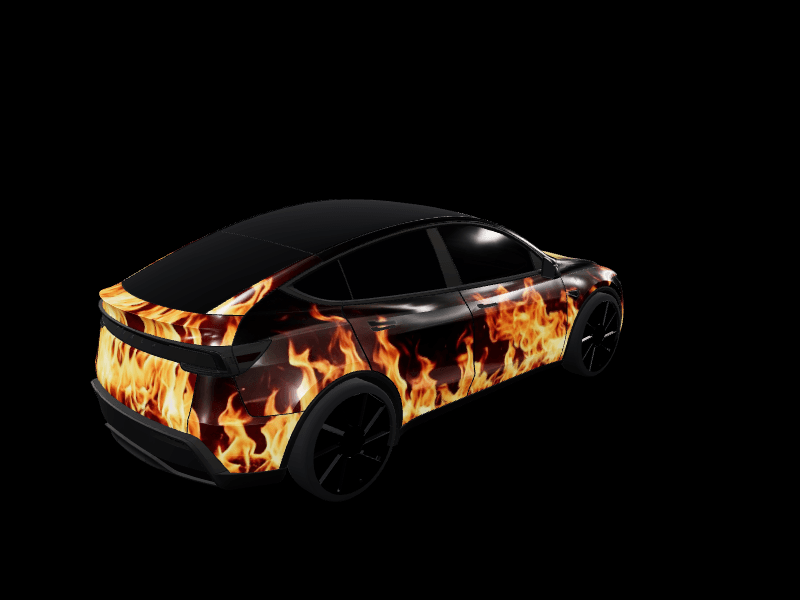
Your Tesla can already show you. Tesla's software supports custom digital wraps: a design you make on Tesla's official template for your model, uploaded from the Tesla app (or a USB drive), displayed on the car everywhere your Tesla renders itself on screen. Designing one costs nothing.
The FrunkLab studio gives you the template for your exact model (every Model 3, Model Y including Juniper, Cybertruck, Model S, and Model X), and a live 3D preview so you can spin the car and judge the look from every angle. Draw the design, upload images, or describe it and let the AI generator produce it. If you've never touched a design tool, your first Tesla wrap walks through the whole flow in about 15 minutes, and designing in the Garage shows the 3D-first editor where you paint directly on the car.
The workflow that saves real money:
- Design the wrap you're considering, or grab a close match from the community's wrap ideas for your model.
- Load it on your car's screen and live with it for 2 weeks. You'll see it every time you drive.
- Still love it? Take the design to a wrap shop as a spec. You'll walk in knowing exactly what you want, which is a better conversation than pointing at a swatch book.
- Lukewarm? You just saved $3,000, and you can swap the digital wrap for a new idea in 5 minutes.
A digital wrap isn't a substitute for vinyl if you want the physical car changed. It's the test drive.
What about ceramic coating?
Ceramic coating comes up in every PPF conversation, so for completeness: it's a liquid polymer, cures to a glass-like layer a few microns thick, and makes the car easier to wash and more resistant to chemical etching. It does not stop rock chips. Think of it as the third product in the stack: coating for washability, PPF for impact, vinyl for looks. Shops commonly apply ceramic coating on top of both films.
Common questions
Does PPF or vinyl damage Tesla paint? Professionally installed and removed, no. Both films are designed to release cleanly. Cheap film left baking for 8 years is a different story, which is why the film brand and the installer matter more than the product category.
Can I wrap a leased Tesla? Physically, yes, with caveats about return condition. Digitally, absolutely, and it's the zero-risk option. We cover the details in can you wrap a leased Tesla.
How long does installation take? Full-front PPF is usually a 1-day job. A full vinyl wrap runs 3 to 5 days at a good shop, because panels come off and edges get tucked.
Does a wrap affect the cameras or sensors? Shops leave camera housings, sensor windows, and the charge port unwrapped. Tesla's cameras see through glass, not paint, so a body wrap doesn't touch Autopilot behavior.
Is any of this covered under warranty? Films don't void Tesla's warranty. Damage caused by a bad installation (a razor slip, trapped moisture) isn't Tesla's problem though, which again points at choosing the installer carefully.
Whichever film you choose, preview the color on your own car first with the free Tesla Model Y wraps and Tesla Model 3 wraps.
Whichever film you land on, the design decision comes first, and that part's free: open the studio and see your Tesla in the look before you pay anyone to make it permanent.
Put a custom wrap on your Model Y
Community designs, free to download, or make your own in the browser.